The abacus and its history
The word abacus comes from the Greek abax, meaning “calculating board” or “calculating table”.
Counting boards and abacuses were used across the ancient world — in Mesopotamia, Egypt, Persia, Greece, Rome, India, China, Japan, Korea and Russia. Chinese records point to an early abacus around 500 BC, and the bead abacus as we know it today was in wide use in China by about 1300 AD.
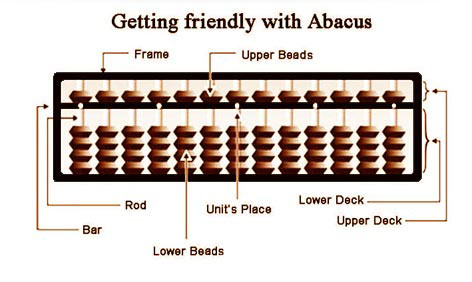
Japan later refined the design into the soroban, with one bead above the beam and four below. It is the model used around the world today — and the one every eMind student learns on. Abacuses are still in everyday use in parts of China, Japan and Russia.
The abacus gives children countable beads to see numbers in our base-10 system. By moving the beads, they learn to add, subtract, multiply and divide, and later to work with fractions and square roots.
What is mental abacus?
Mental abacus is a way of calculating on a picture of the abacus formed in the mind. It follows exactly the same rules as the physical abacus — but the beads only exist in the child's imagination.
Once a child can picture the soroban clearly, they no longer need to hold one. They move imaginary beads and read off the answer, often faster than someone using a calculator.
Why it matters
Children have enormous potential, but it is not always easy to know how to draw it out. Abacus training gives them a structured, enjoyable way to build concentration, memory and confidence — skills that carry into every subject, not just maths.
- Confidence in calculation
- Concentration and mental endurance
- Listening and visualisation skills
- Problem-solving ability